
Sewer Camera Inspection Services
in Palmdale, Lancaster & Santa Clarita, CA
HAVE A PLUMBING ISSUE? CALL BROCK PLUMBING TODAY.
Video Camera Inspection of Drain Lines
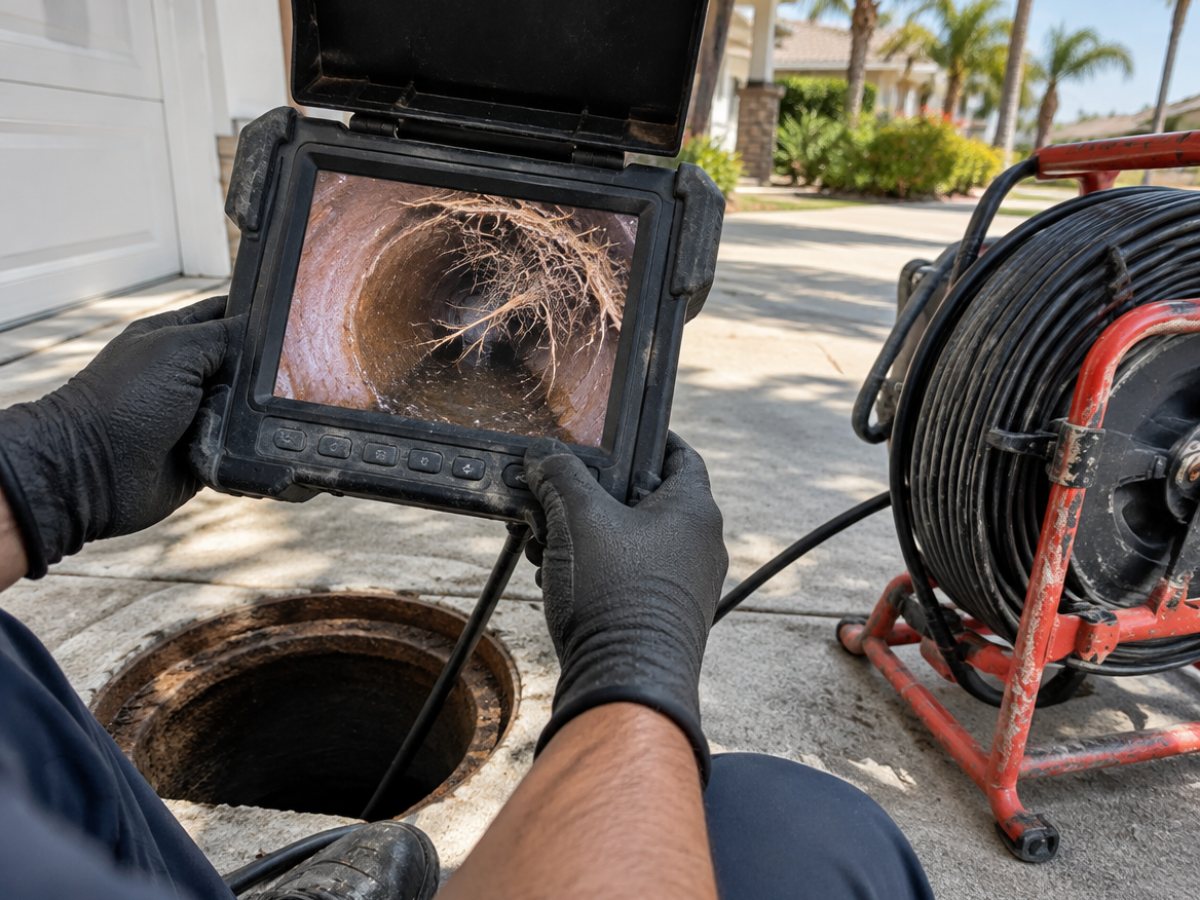
A sewer camera inspection, also called a video camera inspection of drain lines, sends a waterproof camera on a flexible cable through your drain or sewer line so we can see its condition on a monitor. It shows roots, cracks, sags, offset joints, grease buildup and collapsed sections, and a locator on the surface can mark exactly where each problem sits. It is how we decide between cleaning, spot repair and replacement without guessing.
Get a useful sewer-camera inspection
An inspection is most helpful when its purpose is clear. Tell Brock whether you are investigating recurring blockages, checking a known repair or preparing for a property decision. Ask which section can be inspected, what preparation may be required and which findings or records will be provided. The inspection should inform a decision rather than automatically authorize additional work.
Read the camera-inspection and reporting checklist
Explain why you need the inspection
A recurring drain problem and a buyer’s request for sewer information are different starting points. Describe the concern and identify who will use the result. If a report must meet another party’s requirements, provide those requirements before booking. Ask whether the proposed service includes a recording, a written explanation or a discussion of the findings. A general camera-inspection description may not cover every document needed for a transaction or other formal decision.
Share the relevant history
Provide available records of clearing, repairs or previous inspection. Explain which fixtures are affected and whether symptoms changed after earlier work. If you have been given a repair recommendation by another contractor, share the actual scope or record rather than only a verbal summary. This helps connect the assessment to the concern you want answered. It does not mean the new inspection will automatically confirm a previous diagnosis or inspect parts of the system outside the agreed scope.
Confirm access before the visit
Ask which access point is proposed and whether it is accessible at the property. Mention locked gates, stored items, tenants and restricted areas. If an access opening or other preparation is needed, establish whether it is included or a separate stage. Do not remove fixtures or enter a contaminated area to prepare access yourself. Keep approval for a new opening separate until its purpose, price and restoration arrangements have been explained.
Understand the inspection boundary
Ask where the inspection starts and which line or section it is intended to cover. A record of one run should not be assumed to describe every branch or connection in the property. If the camera cannot reach a section or the view is limited, ask for that limitation to be recorded clearly. A useful result identifies what was observed and what remains unknown rather than giving an unqualified assessment of the entire plumbing system.
Clarify any cleaning requirement
Material in the line may affect the usefulness of the view. Ask whether cleaning is recommended to obtain more information and whether that work is included. Establish the purpose of each stage before authorizing it. A price for inspection and a price for clearing may cover different activities. If a further visit is proposed after preparation, ask which question it will answer and how the next decision will be made. Keep those stages distinct when comparing quotes.
Relate findings to the location
Ask the team to explain where an observation is in relation to the inspected line and what information supports that location. If locating is part of the service, confirm what will be marked or documented and the limits of that information. A camera observation should be explained in context; an image on its own does not tell you which repair is appropriate. Request clarification before treating a general description as authorization to open a floor, wall or outside surface.
Separate observation from recommendation
The inspection may identify an obstruction, a concern that needs more assessment or a defect that supports a repair proposal. Ask which finding leads to the recommendation and which alternatives are relevant. A pipe should not be described as needing complete replacement solely because the inspection service exists. Request a separate clear scope for additional work, including the affected section, access and restoration. Compare that scope before deciding whether to proceed.
Keep the records usable
If a recording or written explanation is included, ask how it will be supplied and what it identifies. Keep the date, property and inspected section with the record. Ask the team to explain any limitation, unresolved question or proposed follow-up. If you intend to share the record with a buyer, property manager or another contractor, confirm that it contains the information they need. Do not assume that an invoice alone serves the same purpose as a documented inspection finding.
Agree on the next step
An inspection can conclude with maintenance advice, a further assessment or a repair proposal. Ask what needs attention now and what can be discussed separately. If no additional work is recommended, keep the record for future reference rather than treating it as a permanent guarantee about every part of the system. If a later blockage occurs, provide the earlier findings and explain what has changed so the next assessment starts with the relevant history.
Confirm the scope before authorizing work
Ask which assessment, labour, materials and equipment the written estimate includes. Identify access openings, finish restoration, disposal and cleanup separately when they are not part of the same scope. An advertised starting price or special offer does not establish the total for every property. Confirm eligibility and any restrictions before booking. If the diagnosis changes, request an explanation of the proposed additional work and its price before approving it.
Keep a useful record of the visit
Before the visit ends, ask what was found, what was changed and how the result was checked. Confirm whether photographs, video or test results are included for your particular job rather than assuming every service provides the same records. Keep the estimate, invoice and any supplied documentation together. Ask what symptoms would justify another call and which maintenance tasks, if any, are recommended. Request applicable warranty terms in writing, including exclusions and any conditions you need to follow.
Arrange the appointment and access
Describe the problem, your location and who can authorize work. Mention tenants, locked gates, restricted parking and relevant access concerns. An online request is a request for contact; confirm the appointment and current availability with the team. For an urgent problem, use the phone number on the page instead of assuming a form has triggered dispatch. Keep people and pets away from an affected work area.

Brock Plumbing is a family-owned local plumbing company with licensed technicians, offering Sewer Camera Inspection Services in the Antelope Valley and Santa Clarita Valley (Palmdale, Lancaster, Quartz Hill, Santa Clarita, Valencia, Newhall, Saugus, Canyon Country and Stevenson Ranch). Every job starts with an upfront written estimate, and we charge by the job, not by the hour.
Brock Plumbing provides sewer camera inspections across the Antelope Valley and the Santa Clarita Valley in northern Los Angeles County.
Before you spend a dollar on digging or guessing, you should see what’s actually wrong. Brock Plumbing’s sewer camera inspection sends a waterproof HD camera down your line and shows you the exact problem, on screen, in real time — anywhere in the Antelope Valley.
When You Need a Camera Inspection
- Recurring or whole-house backups
- Buying or selling a home (pre-purchase sewer scope)
- Slow drains after previous repairs
- Locating a clog, break, or root intrusion before any digging
What the Camera Finds
Root intrusion, cracked or collapsed pipe, bellies (low spots that hold water), grease and scale buildup, offset joints, and exactly how deep and where the problem sits — so any repair is precise instead of exploratory.
Pre-Purchase Sewer Scopes
Buying an older Lancaster, Palmdale, or Santa Clarita home? A sewer scope is the cheapest insurance you’ll ever buy — a hidden sewer problem can cost thousands. We provide recorded footage and a clear report you can share with your agent.
Sewer Camera Inspections in Palmdale, Lancaster and Quartz Hill
We scope sewer and drain lines for owners and buyers in Palmdale, Lancaster and Quartz Hill.
Camera Inspection in Palmdale, CA
Buyers in Palmdale often ask for a camera look at the sewer before closing, especially on older tract homes where the lateral has never been checked. It is a short visit that can save a big surprise. Our Palmdale plumbing page has more.
Camera Inspection in Lancaster, CA
In Lancaster we use the camera to separate root problems in older clay and cast iron lines from simple grease clogs, so you pay for the fix the line actually needs. See our Lancaster plumbing page.
Camera Scoping for Newhall, Stevenson Ranch and Canyon Country Lines
Camera inspections are also available in Newhall, Stevenson Ranch, Canyon Country, Valencia and Saugus.
Camera Inspection in Santa Clarita, CA
Santa Clarita laterals on hillside lots can run long and deep, and a camera with a locator shows both the condition and the route before anyone digs. Visit our Santa Clarita plumbing page.
From Camera Finding to Next Step
| What we see | What it usually means | Typical next step |
|---|---|---|
| Roots at a joint | A joint has loosened enough for roots to get in | Cut and flush the roots, then consider repair at that joint |
| Standing water in a low spot | A sag or belly in the line | Monitor, or repair the section if it keeps catching debris |
| Heavy grease or scale coating | Buildup narrowing the pipe | Hydro jetting to clean the line |
| Cracks or an offset joint | Ground movement or aging pipe | Spot repair or a trenchless option |
| Collapsed or crushed section | Line failure | Excavation or trenchless replacement of that section |
Frequently Asked Questions
How much does a camera inspection cost?
It’s a flat, upfront fee — and it’s often included free when paired with drain or sewer service.
Do I get a copy of the video?
Yes, we can provide the footage and our findings.
Know before you dig — call (661) 235-0506 to schedule a camera inspection.
What does a sewer camera inspection show?
Root intrusion, cracked or collapsed pipe, bellies that hold water, grease and scale buildup and offset joints, plus where each problem sits so any repair is precise.
Should I get a sewer scope before buying a home?
If you are buying an older home in Lancaster, Palmdale or Santa Clarita, a pre-purchase sewer scope shows the condition of the line first. We provide recorded footage and a clear report you can share with your agent.
When do I need a camera inspection?
Recurring or whole-house backups, slow drains after earlier repairs, or before any digging to locate a clog, break or root intrusion.
How does the camera help decide on a repair?
It lets us choose between cleaning, spot repair and replacement without guessing, because a locator on the surface marks where each problem is.
Areas We Serve for Sewer Camera Inspection
We inspect drain and sewer lines by camera for homes across the Antelope Valley and the Santa Clarita Valley.
- Sewer camera inspection across the Antelope Valley
- Sewer camera inspection in Palmdale, CA
- Sewer camera inspection in Lancaster, CA
- Sewer camera inspection in Quartz Hill, CA
- Sewer camera inspection in Pearblossom, CA
- Sewer camera inspection across the Santa Clarita Valley
- Sewer camera inspection in Santa Clarita, CA
- Sewer camera inspection in Valencia, CA
- Sewer camera inspection in Newhall, CA
- Sewer camera inspection in Saugus, CA
- Sewer camera inspection in Canyon Country, CA
- Sewer camera inspection in Stevenson Ranch, CA
Schedule a Sewer Camera Inspection
OUR SERVICE AREA