
Hydro-Jetting Drain Line Cleaning
in Palmdale, Lancaster & Santa Clarita, CA
HAVE A PLUMBING ISSUE? CALL BROCK PLUMBING TODAY.
Hydro-Jetting in Palmdale, Lancaster and Santa Clarita — A Deeper Clean for Drain Lines
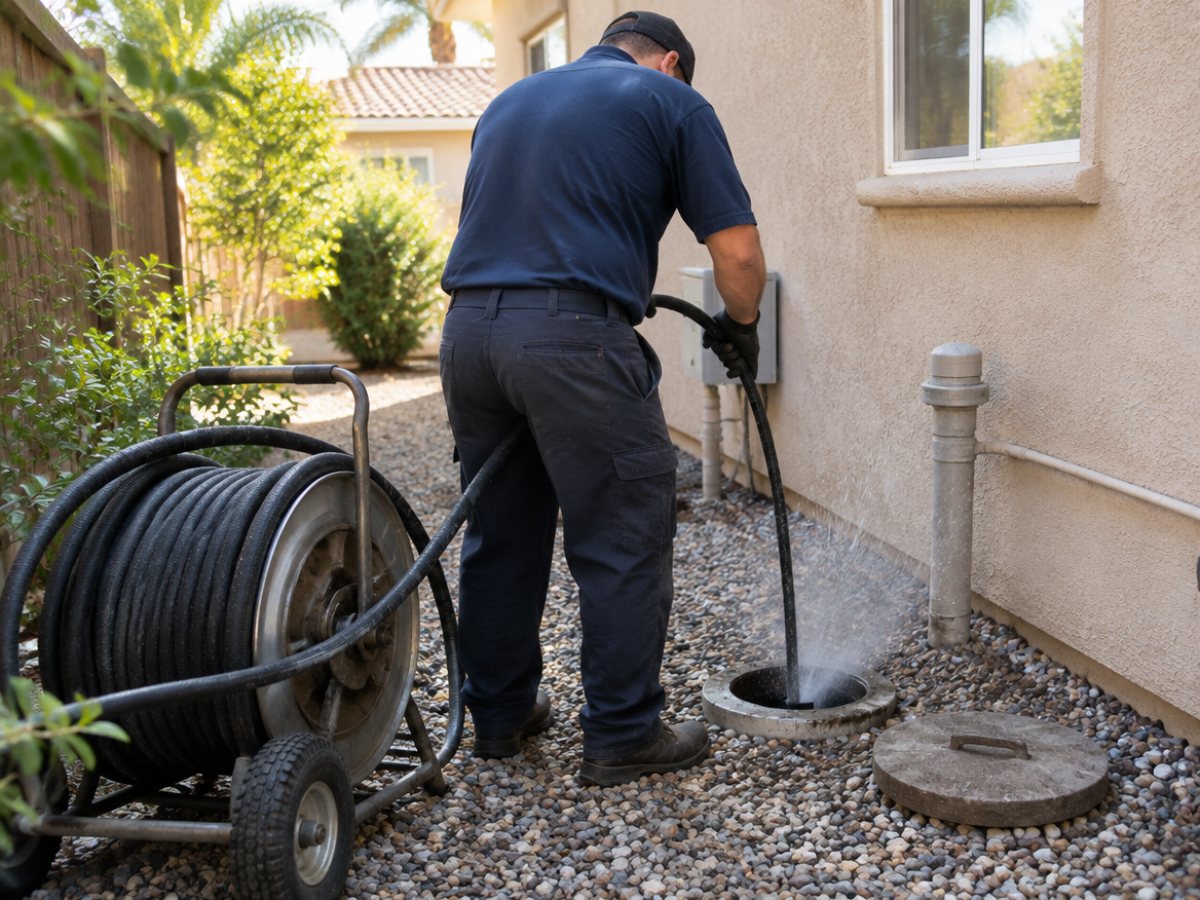
Hydro-jetting cleans a drain line by sending water through a hose and nozzle at high pressure, with jets that point backward to pull the hose forward and forward jets that break up what is in front of it. The result is a pipe that is scoured wall to wall instead of a pipe with a hole punched through the clog. This page is the regional explainer for how and when we use it in Palmdale, Lancaster, Santa Clarita and the towns between them.
If you already know you want a line jetted, our main hydro-jetting service page covers booking and the basics. Here we go deeper into the decision: which lines benefit, which ones should not be jetted until they are looked at, and what changes from one part of our service area to the next.
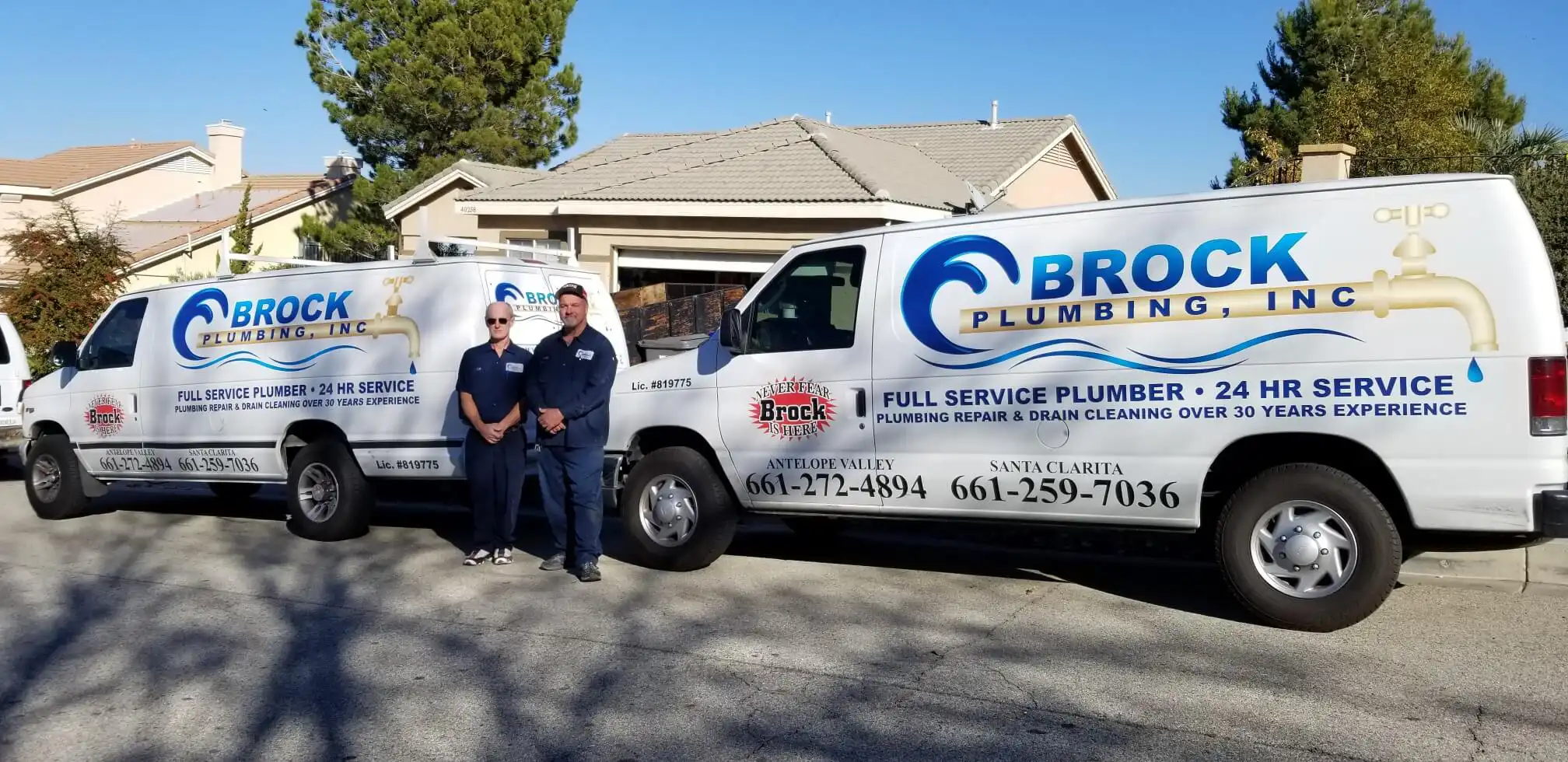
Brock Plumbing is a family-owned local plumbing company with licensed technicians, offering Hydro-Jetting Drain Line Cleaning in the Antelope Valley and Santa Clarita Valley (Palmdale, Lancaster, Quartz Hill, Santa Clarita, Valencia, Newhall, Saugus, Canyon Country and Stevenson Ranch). Every job starts with an upfront written estimate, and we charge by the job, not by the hour.
Brock Plumbing provides hydro-jetting drain line cleaning across the Antelope Valley and the Santa Clarita Valley in northern Los Angeles County.
Why a Cable Clears a Drain but Jetting Cleans It
A drain snake, or cable machine, spins a cutting head through the blockage. It is fast and it is the right first tool for a hair clog or a toy in a toilet. The trouble is what it leaves behind. Grease that has hardened along the sides of a kitchen line, soap scum in a laundry branch and the mineral crust that builds up inside older pipe all stay put. Water finds its way through the new opening for a while, and then the line narrows again.
A jetter works on the whole circumference of the pipe. The spray lifts the coating off the walls and the flow carries it downstream to the main or the city sewer. That is why a line that has needed snaking several times in a year is usually a jetting candidate, and why we often suggest it after a camera shows heavy buildup rather than one solid clog.
Lines We Jet Most Often
Kitchen Drain Lines
Kitchen lines collect cooking fat, coffee grounds and food scraps that slip past the disposal. As the fat cools it sticks to the pipe and catches everything that follows. Jetting the kitchen branch back to where it joins the main is the most common job we do with the jetter.
Laundry and Utility Lines
Washing machines push lint, fabric softener residue and detergent through a small branch line. Over time that forms a felt-like layer that a cable tends to slide past. A jet nozzle sized for that branch clears it without forcing debris further into the system.
Main Building Drains and Sewer Laterals
When several fixtures back up together, the restriction is usually in the main line or the lateral that runs to the street. On those runs we use a larger nozzle and, when roots are involved, a root-cutting head first and the jetter second to flush the cuttings out instead of leaving them to settle.
Commercial Kitchen and Grease Lines
Restaurants and shared kitchens build grease faster than any house. Routine jetting on a set schedule is often cheaper than repeated emergency calls, and we can work around closing times so the kitchen does not lose a service.
When We Hold Off on Jetting
Jetting is strong enough that it should not go into a pipe blind. Before we jet a main or a lateral we like to see inside it with a camera, especially on older homes. These are the situations where we slow down or pick another method:
- Clay or cast iron pipe that the camera shows is cracked, offset or badly corroded
- A line with a known belly, where water and debris sit in a low spot
- Orangeburg or other fiber pipe, which can be damaged by the spray
- A drain that has not been identified yet, such as a mystery line in the yard
In those cases the honest answer might be a gentler cleaning, a spot repair, or a replacement conversation. Our trenchless sewer repair page explains the repair side if the pipe itself is the problem.
What a Jetting Visit Looks Like
We start by asking what has been happening: which fixtures are slow, whether it is getting worse, and whether anyone has snaked the line recently. Then we find a cleanout. Most homes have one near the foundation or in the front yard, and on some older houses we pull a toilet to get access instead.
After a camera look where it makes sense, we run the jetter from the cleanout toward the street or the main, working in sections. Once the line runs clear we run water from the fixtures that were backing up and, on main lines, we usually send the camera back through so you can see the difference for yourself.
Keeping a Jetted Line Clean
Jetting resets the pipe, and habits decide how long it stays that way. Scrape pans into the trash before rinsing them, and let bacon fat or pan drippings cool in a can rather than pouring them down the sink. Run the disposal with plenty of cold water and do not feed it fibrous peels or coffee grounds in large amounts.
For lines that clog because of the house itself, like a long kitchen run with little fall, a routine jetting visit before the line closes up is usually less disruptive than waiting for the next backup.
Jetting Drain Lines in Palmdale, Lancaster and Quartz Hill
Grease-lined kitchen lines and root-prone sewer laterals in Palmdale, Lancaster and Quartz Hill are where jetting does its best work.
Palmdale, CA
In Palmdale we see two very different kinds of lines. Newer tracts out toward Rancho Vista and Anaverde tend to have plastic drains that jet cleanly, so kitchen grease is the usual reason for a visit. In the older blocks on the east side, closer to the original town, we are more careful and put a camera in before any jetting on the main.
Lancaster, CA
The Antelope Valley has hard water, and in Lancaster that shows up as scale inside drain lines as well as on faucets. Scale plus grease makes a rough, narrow pipe that a cable only scratches. Jetting is often the step that finally stops the repeat calls on older Lancaster homes near the downtown core and the neighborhoods off the Antelope Valley Freeway.
High-Pressure Line Cleaning in Valencia, Newhall and Saugus
We bring the jetter to Valencia, Newhall, Saugus, Canyon Country and Stevenson Ranch for lines that keep backing up.
Santa Clarita, CA
Around Santa Clarita, especially in the established parts of Canyon Country, Newhall and Saugus, mature trees and older laterals mean roots are a regular find. We cut first and jet second so the root fragments leave the line. In Valencia HOA communities we also check access and any common-area rules before we set up in a shared driveway.
Hydro-Jetting at a Glance
| Situation | Why jetting helps | What we check first |
|---|---|---|
| Kitchen sink slows down again after snaking | Removes the grease layer, not just the plug | Where the kitchen branch meets the main |
| Several drains gurgle or back up together | Clears buildup along the main line | Camera view of the main for damage |
| Roots found in the sewer lateral | Flushes out cut roots after the cutter head | Pipe material and joint condition |
| Laundry line overflows at the standpipe | Strips lint and soap residue from the branch | Standpipe height and trap condition |
| Restaurant or shared kitchen grease | Keeps the line open on a routine schedule | Grease interceptor and access points |
Hydro-Jetting Drain Line Cleaning FAQs
For sound pipe, yes. We adjust the nozzle and pressure to the line size and material, and we look with a camera first on older mains or anything we have not seen before. If the pipe is cracked or badly corroded, we tell you and suggest another approach.
A snake cuts an opening through a clog. A jetter cleans the full inside of the pipe, taking grease, scale and sludge off the walls so the line stays open longer.
Light root growth can be flushed away by the jet. Heavier roots are cut first with a root head, then the line is jetted to clear the cuttings. Roots coming back is a sign the joints need a repair.
Usually not. We work from an existing cleanout or through a fixture like a toilet. If a home has no usable cleanout, adding one is a small job that makes future cleaning much easier.
It can clear the debris that settles in the low spot, but it cannot lift the pipe. A bellied line tends to fill again, so we explain the repair options along with the cleaning.
Many do. Grease builds much faster in a commercial kitchen, and a regular jetting schedule, along with keeping the grease interceptor serviced, keeps the line from closing up during a busy shift.
Areas We Serve for Hydro-Jetting Drain Line Cleaning
We jet kitchen, laundry and main drain lines for homes and businesses around the Antelope Valley and the Santa Clarita Valley.
- Hydro-jetting drain line cleaning across the Antelope Valley
- Hydro-jetting drain line cleaning in Palmdale, CA
- Hydro-jetting drain line cleaning in Lancaster, CA
- Hydro-jetting drain line cleaning in Quartz Hill, CA
- Hydro-jetting drain line cleaning in Pearblossom, CA
- Hydro-jetting drain line cleaning across the Santa Clarita Valley
- Hydro-jetting drain line cleaning in Santa Clarita, CA
- Hydro-jetting drain line cleaning in Valencia, CA
- Hydro-jetting drain line cleaning in Newhall, CA
- Hydro-jetting drain line cleaning in Saugus, CA
- Hydro-jetting drain line cleaning in Canyon Country, CA
- Hydro-jetting drain line cleaning in Stevenson Ranch, CA
Request Hydro-Jetting Drain Line Cleaning
OUR SERVICE AREA