
Sewer Camera Inspection
in Palmdale, Lancaster & Santa Clarita, CA
HAVE A PLUMBING ISSUE? CALL BROCK PLUMBING TODAY.
Sewer Camera Inspection in Palmdale, Lancaster and Santa Clarita — See Inside the Line
A sewer camera inspection, often called a sewer scope, follows the main line from your house out through the lateral to where it connects to the public sewer, or to the tank on a septic property. It shows the condition of the pipe you are responsible for but almost never see. In Palmdale, Lancaster and Santa Clarita we do most of these for two reasons: a home is being bought or sold, or the whole house is backing up.
Arrange a sewer scope for the decision it supports
Tell Brock who needs the sewer information and why. A home buyer, owner or property manager may need different records. Confirm the intended inspection and reporting scope before booking. A sewer-scope visit should be described clearly rather than treated as a guarantee about every hidden part of the property.
Read the service-planning checklist
Share the reporting requirements early
If a buyer, agent or other recipient has requested specific information, provide that request before the visit. Ask whether the proposed service supplies a video, written findings or another form of record. Confirm timing and who receives the result. Do not assume the standard invoice meets every recipient’s needs. A useful record identifies the inspected area and its limits so that later decisions are not based on a broader inspection than was actually performed.
Confirm preparation and access
Ask which access point is proposed and whether the inspection depends on cleaning or other preparation. Mention tenants, locked gates and restrictions on entering the property. If access cannot be confirmed initially, establish what the first stage will cover and what may be separately quoted. Do not remove fixtures or enter unsafe areas to prepare. Keep any required opening and restoration arrangements explicit before additional work is authorized.
Separate findings from repair approval
Ask the team to explain the observed condition and any uncertainty. If repair is recommended, request the relevant location and a defined scope rather than interpreting the existence of an inspection as a reason to replace a line. Compare options only where they address the finding. Keep the inspection record for future reference, and explain what has changed if another assessment is needed later. A previous scope is evidence of that visit, not a permanent warranty for the whole system.
Confirm the scope before authorizing work
Ask which assessment, labour, materials and equipment the written estimate includes. Identify access openings, finish restoration, disposal and cleanup separately when they are not part of the same scope. An advertised starting price or special offer does not establish the total for every property. Confirm eligibility and any restrictions before booking. If the diagnosis changes, request an explanation of the proposed additional work and its price before approving it.
Keep a useful record of the visit
Before the visit ends, ask what was found, what was changed and how the result was checked. Confirm whether photographs, video or test results are included for your particular job rather than assuming every service provides the same records. Keep the estimate, invoice and any supplied documentation together. Ask what symptoms would justify another call and which maintenance tasks, if any, are recommended. Request applicable warranty terms in writing, including exclusions and any conditions you need to follow.
Arrange the appointment and access
Describe the problem, your location and who can authorize work. Mention tenants, locked gates, restricted parking and relevant access concerns. An online request is a request for contact; confirm the appointment and current availability with the team. For an urgent problem, use the phone number on the page instead of assuming a form has triggered dispatch. Keep people and pets away from an affected work area.

Our sewer camera inspection service page is the quick overview. This regional page focuses on the main line and the lateral, what buyers and sellers should ask for, and how the answers differ around the valley. For the drains inside the house, see our video camera drain inspection page instead.
Brock Plumbing is a family-owned local plumbing company with licensed technicians, offering Sewer Camera Inspection in the Antelope Valley and Santa Clarita Valley (Palmdale, Lancaster, Quartz Hill, Santa Clarita, Valencia, Newhall, Saugus, Canyon Country and Stevenson Ranch). Every job starts with an upfront written estimate, and we charge by the job, not by the hour.
Brock Plumbing provides sewer camera inspection across the Antelope Valley and the Santa Clarita Valley in northern Los Angeles County.
Who Owns the Sewer Lateral
The lateral is the pipe that carries everything from your house to the public main, usually under the front yard and sometimes under the sidewalk or street. In most of our service area the homeowner is responsible for that pipe up to the connection. Standard home inspections generally do not include a look inside it, which is why so many buyers are surprised by a sewer repair in their first year.
A scope before closing tells you what you are buying. A scope before listing tells a seller what a buyer is going to find, while there is still time to plan a repair or price it in.
What a Sewer Scope Shows
Roots at the Joints
Tree roots find their way into older joints and grow into a mat that catches paper and waste. The camera shows where they enter and how much of the pipe they fill.
Offset, Cracked or Collapsed Sections
Ground movement, heavy vehicles over the lateral and simple age shift pipe sections out of line. An offset joint leaves a lip that snags debris. A crack can let soil in. A collapsed section blocks the line completely.
Bellies and Poor Slope
A low spot holds standing water and waste. The camera shows water sitting in the pipe, and we can mark the location and depth with the locator.
Pipe Material and Past Repairs
The scope tells us whether the line is clay, cast iron, plastic or a mix, and whether someone has already repaired part of it. That history matters when you are deciding what to do next.
How We Run a Real Estate Sewer Inspection
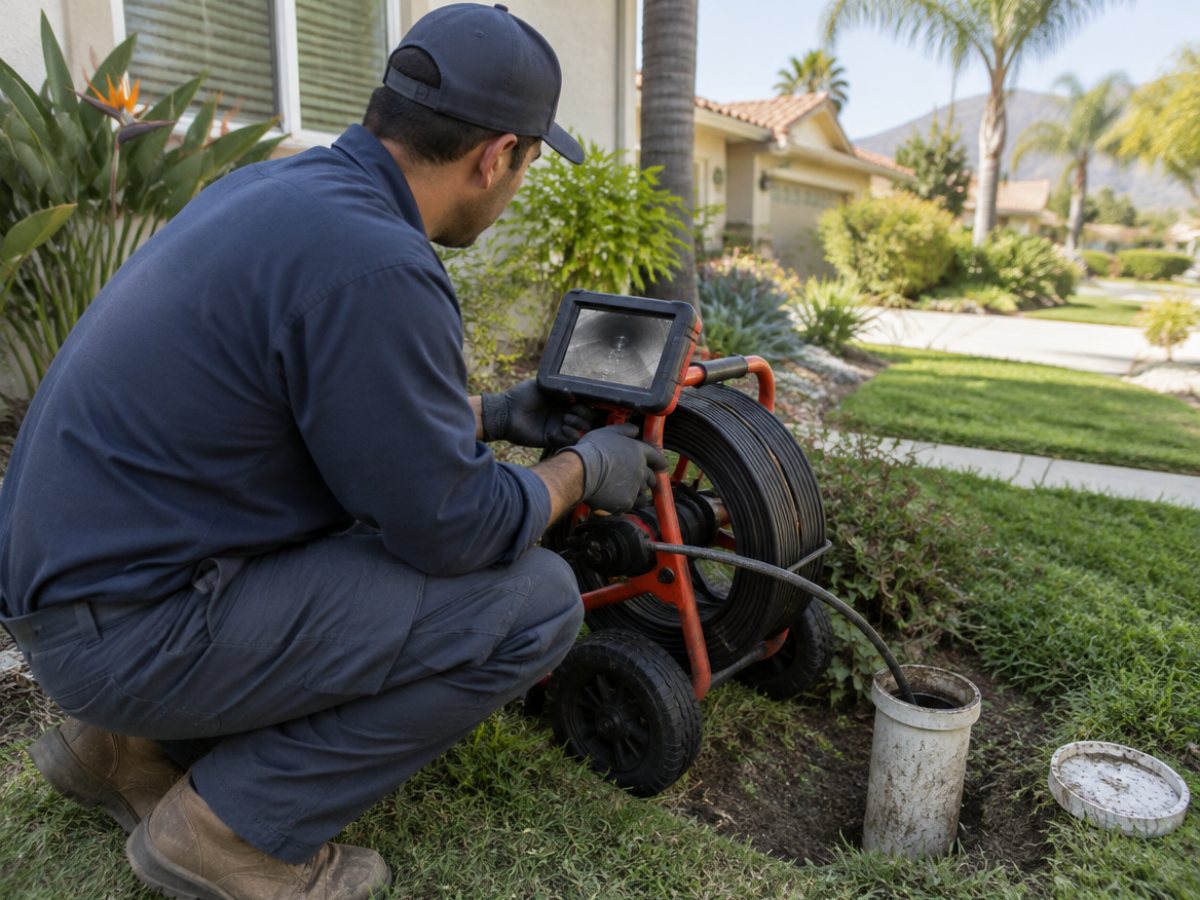
- Locate a cleanout near the house or at the property line, or plan access through a toilet
- Run water so the camera travels with the flow and the picture stays clear
- Follow the main to the public connection and note the position of each finding
- Mark any problem spot on the ground with the locator when it helps
- Give you the video and a plain written summary of what we saw
If the line is sound, the report says so. If it needs work, we explain the options, from spot repair to full replacement, and whether a trenchless method is realistic. Our sewer repair and replacement page covers those repairs.
Questions Buyers Should Ask About the Sewer Line
- Has the sewer lateral ever been repaired or replaced, and is there paperwork?
- Are there large trees near the path of the line in the front yard?
- Is there an accessible cleanout, or will access be through a fixture?
- Has the home had any backups, and what was done about them?
- Is the property on public sewer or on a septic system?
Sellers and listing agents rarely know every detail, but the answers help put the scope results in context. A lateral that was replaced with plastic pipe during a previous sale looks very different on camera from an original clay line, and knowing that history avoids confusion.
Reading the Results Without the Jargon
Sewer reports can sound alarming, so we keep ours plain. We separate findings into three groups: items that need repair now because they are blocking or damaging the line, items to watch or maintain, such as light roots, and observations that simply describe the pipe. That makes it easier for a buyer, a seller and their agents to talk about the same facts.
If a repair is recommended, we give a description of the work that another contractor could quote as well. You are never locked into using us because we did the inspection.
Scoping a Line Before a Project
A sewer scope is useful outside of home sales too. Before adding a bathroom, building a patio or planting trees in the front yard, it helps to know where the lateral runs and how deep it sits. The locator marks the route on the ground, so new work does not end up on top of a pipe that may need attention later.
Owners of rentals also use scopes between tenants, to catch a developing problem before it turns into an emergency call from the new occupant.
Sewer Scopes for Palmdale, Lancaster and Quartz Hill Buyers
Buyers and owners in Palmdale, Lancaster and Quartz Hill call us to scope the lateral before closing or before a remodel.
Palmdale, CA
Palmdale has a wide mix of home ages, from older neighborhoods near the city center to newer tracts to the west and south. On resales of older homes we pay close attention to the joints on the lateral, where roots from long-established yard trees are a common find.
Lancaster, CA
Many Lancaster resale homes still have the original sewer lateral. Older clay and cast iron pipe is common there, and a scope often shows the joint separation or corrosion that a buyer should know about. On rural lots at the edges of town we also confirm whether the house is on the public sewer at all.
Scoping Sewer Laterals in Stevenson Ranch, Newhall and Valencia
Sewer scopes are also available in Stevenson Ranch, Newhall, Valencia, Saugus and Canyon Country.
Santa Clarita, CA
In Santa Clarita, hillside lots and long front yards in areas like Canyon Country and Newhall can mean longer laterals with more changes of direction. In Valencia HOA communities, part of the line may be shared or maintained by the association, and the scope helps sort out where the owner line ends.
Sewer Camera Inspection at a Glance
| Who is asking | Why a scope helps | What they receive |
|---|---|---|
| Home buyer | Sees the lateral condition before closing | Video and written notes on the line |
| Home seller | Knows what a buyer inspection will find | Findings in time to repair or disclose |
| Homeowner with whole-house backups | Pinpoints the blockage or damage on the main | Location and cause, then options |
| Landlord or property manager | Plans work between tenants | A record of the line condition |
| Owner planning an addition | Confirms where the main runs before digging | Route and depth marked on the ground |
Sewer Camera Inspection FAQs
Usually not. Most general home inspections do not put a camera in the main or the lateral, so a separate sewer scope is the way to see that pipe.
That is between the buyer and seller and their agents. Buyers often order it as part of their inspections, and some sellers order one before listing.
Yes. You receive the recording along with a plain summary of what we saw and where it is on the line.
We explain the finding and the realistic repair options. Nothing is done without your approval, and in a sale you can use the report in your negotiations.
Often we can go through a toilet or a roof vent. If access is poor, adding a cleanout is a useful upgrade and makes future inspections easier.
They use similar equipment, but a sewer scope follows the main line and lateral outside the house, while a drain camera inspection covers the lines inside the home.
Areas We Serve for Sewer Camera Inspection
We scope main sewer lines and laterals for owners, buyers and agents across the Antelope Valley and the Santa Clarita Valley.
- Sewer camera inspection across the Antelope Valley
- Sewer camera inspection in Palmdale, CA
- Sewer camera inspection in Lancaster, CA
- Sewer camera inspection in Quartz Hill, CA
- Sewer camera inspection in Pearblossom, CA
- Sewer camera inspection across the Santa Clarita Valley
- Sewer camera inspection in Santa Clarita, CA
- Sewer camera inspection in Valencia, CA
- Sewer camera inspection in Newhall, CA
- Sewer camera inspection in Saugus, CA
- Sewer camera inspection in Canyon Country, CA
- Sewer camera inspection in Stevenson Ranch, CA
Request Sewer Camera Inspection