
Main Line Service & Repair
in Palmdale, Lancaster & Santa Clarita, CA
HAVE A PLUMBING ISSUE? CALL BROCK PLUMBING TODAY.

Clarify the main-line problem before choosing a repair
Tell Brock which fixtures are affected and how the problem developed. Explain earlier clearing, inspection or repair and whether symptoms returned. A main-line service request should identify the concern before selecting a treatment. Ask what the initial assessment covers and when a separate repair decision may be needed.
Read the service-planning checklist
Distinguish clearing from repair
Ask whether the first step is intended to restore flow, assess a recurring issue or investigate an already identified defect. Confirm which equipment or inspection is included. If cleaning is needed before a useful assessment, establish its purpose and cost. Being able to clear a line does not by itself explain every aspect of its condition. Keep the reason for a later repair tied to the findings rather than to the fact that the blockage happened again.
Define the affected section
Ask where the concern is located and what part of the main line can be assessed. Confirm the proposed access and any limitations. If a connection, branch or area beyond the assessed section is outside the estimate, ask for that boundary to be recorded. A service described as main-line work should still identify its actual scope rather than imply that every connected fixture or pipe has been inspected and repaired.
Plan the next decision
If the finding supports repair, compare the proposed method, access and restoration work before approving it. Ask how the completed section will be checked and what record will be available. If maintenance rather than repair is recommended, request the reasoning and which part of the system it covers. Keep the history of the line so a future visit can assess changes without relying only on a generic recommendation.
Confirm the scope before authorizing work
Ask which assessment, labour, materials and equipment the written estimate includes. Identify access openings, finish restoration, disposal and cleanup separately when they are not part of the same scope. An advertised starting price or special offer does not establish the total for every property. Confirm eligibility and any restrictions before booking. If the diagnosis changes, request an explanation of the proposed additional work and its price before approving it.
Keep a useful record of the visit
Before the visit ends, ask what was found, what was changed and how the result was checked. Confirm whether photographs, video or test results are included for your particular job rather than assuming every service provides the same records. Keep the estimate, invoice and any supplied documentation together. Ask what symptoms would justify another call and which maintenance tasks, if any, are recommended. Request applicable warranty terms in writing, including exclusions and any conditions you need to follow.
Arrange the appointment and access
Describe the problem, your location and who can authorize work. Mention tenants, locked gates, restricted parking and relevant access concerns. An online request is a request for contact; confirm the appointment and current availability with the team. For an urgent problem, use the phone number on the page instead of assuming a form has triggered dispatch. Keep people and pets away from an affected work area.
Main Line Service and Repair in Palmdale, Lancaster and Santa Clarita — Backups Solved at the Source
Main line service and repair covers the largest drain in your home: the pipe that collects every fixture and carries it to the public sewer or septic system. When it clogs or breaks, every drain in the house is affected. Service means clearing and maintaining that line. Repair means fixing a damaged section, from one broken joint to the whole lateral.
Our sewer repair and replacement page is the main service page. This regional explainer walks through how we work on a main line, the order we do things in and what we see around Palmdale, Lancaster and Santa Clarita.
Brock Plumbing is a family-owned local plumbing company with licensed technicians, offering Main Line Service & Repair in the Antelope Valley and Santa Clarita Valley (Palmdale, Lancaster, Quartz Hill, Santa Clarita, Valencia, Newhall, Saugus, Canyon Country and Stevenson Ranch). Every job starts with an upfront written estimate, and we charge by the job, not by the hour.
Brock Plumbing provides main line service & repair across the Antelope Valley and the Santa Clarita Valley in northern Los Angeles County.
Signs the Problem Is the Main Line
- Water rises in the tub or shower when a toilet is flushed
- Several fixtures drain slowly at once, especially on the lowest floor
- Gurgling from drains when the washing machine empties
- Sewage at the cleanout or a floor drain
- A sewer smell outside near the cleanout or in the yard
- Unusually green or soggy patches in the yard along the sewer route
If you see sewage coming up, stop using water in the house until the line is cleared. Every flush or load of laundry adds to what backs up.
How We Approach a Main Line Call
Step One: Get It Flowing
We find the cleanout, relieve the backup and clear the line with a machine sized for mains. That gets the house working again, but it is not the end of the job.
Step Two: See What Caused It
After clearing, we run a camera through the main. Roots, a belly, an offset joint or a crushed section each need a different fix, and the video shows which one you have and where.
Step Three: Choose the Repair
Options range from routine maintenance cleaning, to a spot repair at one joint, to lining or replacing the lateral. We explain each one with the footage in front of you.
Main Line Repair Options
Spot Repair
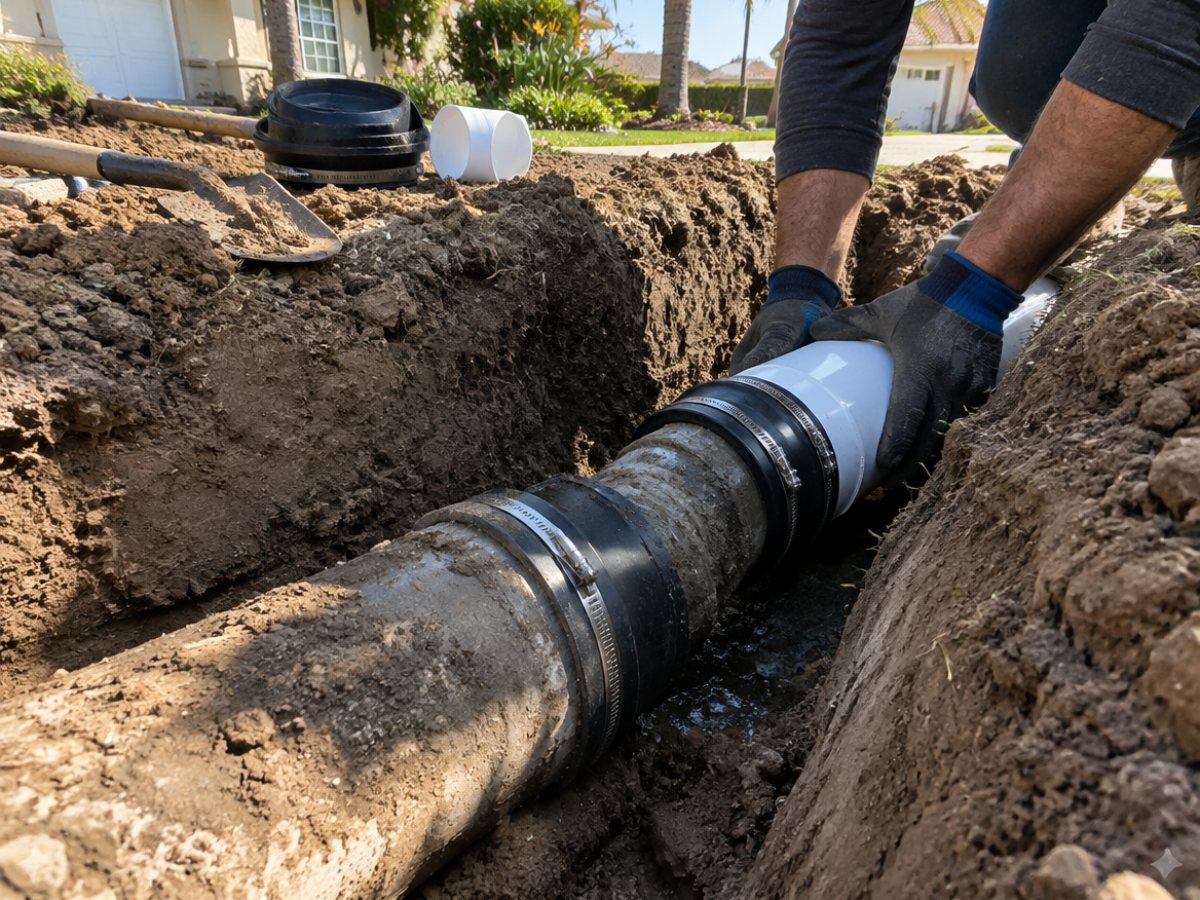
When one section is bad and the rest is sound, we excavate at that location and replace the damaged piece. A good camera locate keeps the hole small.
Trenchless Lining or Bursting
Where the pipe condition and layout allow, trenchless methods renew the line with access pits instead of a full trench, which spares driveways and landscaping. Our trenchless sewer repair page explains the methods.
Full Replacement
When damage runs the length of the lateral, replacement is usually the long-term answer, often with a new cleanout added so future service is simpler.
Adding a Cleanout
Some homes, especially older ones, have no accessible cleanout on the main line. That makes every call harder, because we have to work through a toilet or a roof vent. Installing a cleanout near the house, or at the property line, gives direct access for clearing and camera work in the future. It is often a sensible addition during any main line repair.
Keeping the Main Line Healthy
Wipes, grease and paper towels are the main culprits in main line clogs, even in homes with sound pipe. Keeping them out of the drains and toilets prevents most backups. If your line has a history of roots, a routine cleaning before the roots fill the pipe again keeps the house running while you plan a permanent repair.
When the camera shows the line is in good condition, we tell you, and you may only need occasional cleaning. When it shows a problem that will keep causing backups, we explain the repair and let you decide on the timing.
For businesses, a main line backup can close the doors for a day. Restaurants and offices with shared drains benefit most from planned maintenance, which we can schedule outside business hours.
What to Do During a Backup
Stop using water, including the dishwasher and washing machine. If sewage has come up into the house, keep children and pets away from it and avoid touching it without gloves. If you know where the outdoor cleanout is, and it is safe to reach, loosening the cap can let the backup drain outside rather than into the house. Then call so we can clear the line and find the cause.
A backup that happens right after heavy rain, or at the same time as the neighbors, may be a problem in the public sewer rather than your line. We check your lateral first and, if it is clear, tell you who to contact at the city or county.
After a backup has been cleaned up, it is also worth having the affected floors and walls checked for moisture, since sewage water that soaks into drywall or carpet pad needs proper drying or replacement.
Main Line Repairs in Palmdale, Lancaster and Quartz Hill
Roots, sags and broken joints in the main line cause whole-house backups in Palmdale, Lancaster and Quartz Hill, and we clear the line before choosing a repair.
Palmdale, CA
In Palmdale neighborhoods with established trees, roots in older laterals are one of the main causes of whole-house backups. In newer tracts with plastic mains, we see more grease and wipes buildup than root damage.
Lancaster, CA
Older Lancaster homes are more likely to have clay or cast iron mains, which crack and corrode with age. A main line repair there often starts a conversation about the whole lateral rather than one section. On rural lots at the edge of town, we confirm whether the line goes to the public sewer or a septic tank before we start.
Sewer Main Service for Saugus, Valencia and Stevenson Ranch
We also work on main lines in Saugus, Valencia, Stevenson Ranch, Newhall and Canyon Country.
Santa Clarita, CA
Across Santa Clarita, hillside lots in Newhall and Canyon Country can have deeper laterals and steeper runs, which affects both cleaning and repair methods. We also see many root intrusions in communities with mature street trees.
Main Line Service at a Glance
| Finding on camera | What it means | Common next step |
|---|---|---|
| Roots at one or two joints | Gaps where roots entered | Clear roots, then spot repair or lining |
| Heavy scale or buildup | The pipe is narrowed but intact | Hydro-jetting and maintenance cleaning |
| Belly holding water | A low section collects waste | Excavate and regrade that section |
| Offset or cracked joints along the line | Movement or age damage | Lining or replacement of the lateral |
| Collapsed section | The pipe has failed at that point | Spot repair or full replacement |
Main Line Service & Repair FAQs
It is the largest drain in the house, collecting every fixture and carrying the waste out through the lateral to the public sewer or a septic tank.
Multiple slow drains, water coming up in a tub or shower when you flush, and sewage at a floor drain or cleanout are the usual signs.
Yes. Until the line is cleared, any water you use adds to the backup and can overflow at the lowest drain in the house.
Clearing opens the line, but roots, bellies and broken joints stay until they are repaired. A camera inspection after clearing shows what caused it.
In most areas the homeowner is responsible for the lateral from the house to the public main. Your city or county can confirm the exact point for your property.
Often, yes. Spot repairs and trenchless methods avoid digging the whole yard. The camera inspection tells us which methods are possible.
Areas We Serve for Main Line Service & Repair
We clear, inspect and repair main sewer lines and laterals for homes and businesses across the Antelope Valley and the Santa Clarita Valley.
- Main line service and repair across the Antelope Valley
- Main line service and repair in Palmdale, CA
- Main line service and repair in Lancaster, CA
- Main line service and repair in Quartz Hill, CA
- Main line service and repair in Pearblossom, CA
- Main line service and repair across the Santa Clarita Valley
- Main line service and repair in Santa Clarita, CA
- Main line service and repair in Valencia, CA
- Main line service and repair in Newhall, CA
- Main line service and repair in Saugus, CA
- Main line service and repair in Canyon Country, CA
- Main line service and repair in Stevenson Ranch, CA
Request Main Line Service & Repair
OUR SERVICE AREA