
Most water damage in Antelope Valley homes does not announce itself with a dramatic pipe burst. It starts as a faint warm spot on the floor, a slight bump in the water bill, or a moldy smell in a closet nobody opens. By the time the visible damage shows up, the leak has been quietly soaking the structure for weeks. The good news: most hidden water damage shows up as five or six recognizable patterns. Once you know what to look for, you can catch the leak while the fix is still cheap.
Pattern 1: The unexplained water bill spike
If your bill jumped 20% or more without a change in habits, you have a leak. Read your meter at night before bed with no fixtures running. Read it in the morning. Any movement at all means water is leaving the system somewhere — a toilet flapper, a slab leak, an irrigation valve that did not close fully. The EPA WaterSense leak guidance walks through the meter-based detection method.
Pattern 2: The warm spot on the floor
A hot-side slab leak heats the floor above it. Walk the house barefoot in the morning before the desert sun has heated the slab. If one spot is noticeably warmer than the surrounding floor, you have a slab leak in the hot water line. Mark it and call a plumber with electronic leak detection before anyone breaks concrete.
Pattern 3: The persistent humid room
The Antelope Valley is dry — any room that stays humid week after week has a slow plumbing leak inside the wall or under the slab. Mildew on baseboards, bubbling paint, or a recurring musty smell after cleaning are the visible signs. The leak itself is hidden.
Pattern 4: Sounds when nothing is on
Put your ear to walls in quiet rooms. Water moving inside a wall is almost always a supply leak. Hissing at a specific fitting under a sink is a stop valve weeping. Gurgling from a drain after running water somewhere else is a venting problem.
Pattern 5: Outdoor warning signs
Soggy spots in the yard that do not correspond to your irrigation pattern. Unusually green patches over a buried sewer or supply line. Sunken areas of soil where a pipe has failed and washed dirt away. Mildew or efflorescence on the foundation. Any of these mean buried plumbing is leaking.
Pattern 6: The flooring tells
Hardwood that has cupped without an obvious water event nearby. Tile grout that has cracked or discolored in a specific area. Vinyl that bubbles in one corner of a room. These are slow-leak symptoms — the floor is reacting to weeks of wicking moisture.
What to do when you spot a sign
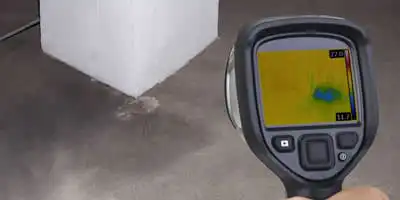
Shut off the main water supply. Document the affected area with photos. Call a plumber with leak-detection equipment — electronic listening gear, thermal imaging, or moisture meters — and do not let anyone start tearing up flooring or drywall until the leak is pinpointed. Random demolition is the most common mistake. Water travels along framing and reveals itself on the lowest, weakest finish surface, often far from the actual source.
After the leak is fixed
The pipe repair is the smallest part of the project. The damage cleanup, structural drying, mold prevention, and finish replacement are the bulk of what insurance pays for. Professional water-damage restoration and structural drying services handle extraction, drying, antimicrobial treatment, and documentation for the carrier. For larger losses with disputed coverage or complex scope, working with licensed public adjuster representation typically recovers materially more from the carrier than going it alone.
Prevention: the annual leak walk
Once a year, walk every room with a flashlight. Look under every sink. Check around every toilet base. Inspect the water heater pan. Walk every exterior side for soggy spots. Read the meter, wait two hours with no water use, read again. The whole audit takes 60 minutes and catches most slow leaks before they turn into structural damage.
Your Antelope Valley Hidden Leak Specialists
At Brock Plumbing, we run leak detection across the Antelope Valley using electronic listening gear and thermal imaging — finding hidden leaks before they turn into rebuilds. We serve Lancaster, Palmdale, Quartz Hill, Acton, Littlerock, Rosamond, Santa Clarita, and surrounding communities. If you have noticed any of the warning signs above, contact us for an evaluation. Our leak detection and slab leak repair services cover the full Antelope Valley region.